What happens inside a material immediately after it absorbs light? Within a
few femtoseconds electrons redistribute their energy; on picosecond timescales
spins, phonons and collective states begin to respond. Using sequences of
extremely short light pulses, the group follows these processes in real time -
and explores new ways of controlling material properties with light.
Established in 2021 and led by PD Dr. Hamoon Hedayat, it focuses on
nonequilibrium charge, exciton, lattice and spin dynamics in low-dimensional
quantum materials. Current systems include van der Waals
semiconductors and heterostructures, layered antiferromagnets such as CrSBr,
MnPSe3 and FePSe3, altermagnets, and Kitaev magnets such
as α-RuCl3.
Scientific enquiries, student projects and applications:
hedayatph2.uni-koeln.de
Latest highlights
July 2026
Fantastic news: the DFG awarded our new SPP 2558 project on
quasiparticle dynamics in altermagnets!
July 2026
Our group-led study on the collapse of hybrid exciton-phonon order was
published in Nature Communications 17, 7607.
January 2026
Anirudh Machanti joined the Hedayat Group as a doctoral researcher on
the DFG SPP 2244 project.
April 2025
The DFG SPP 2244 project on ultrafast optical spin control in
antiferromagnet-TMDC heterostructures started.
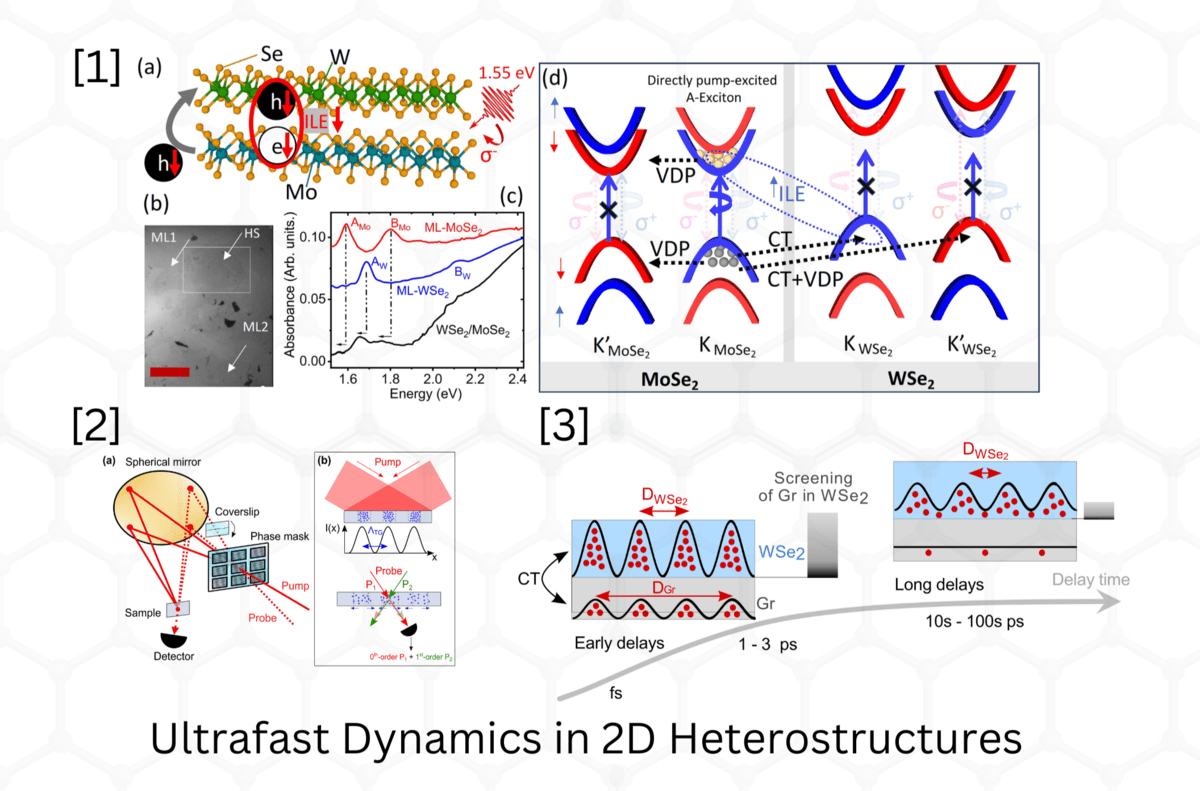
We investigate charge and spin transfer across atomically thin interfaces,
exciton diffusion, valley polarization and magnetic proximity effects in
transition-metal dichalcogenides, graphene-based systems and
antiferromagnet-TMDC heterostructures.
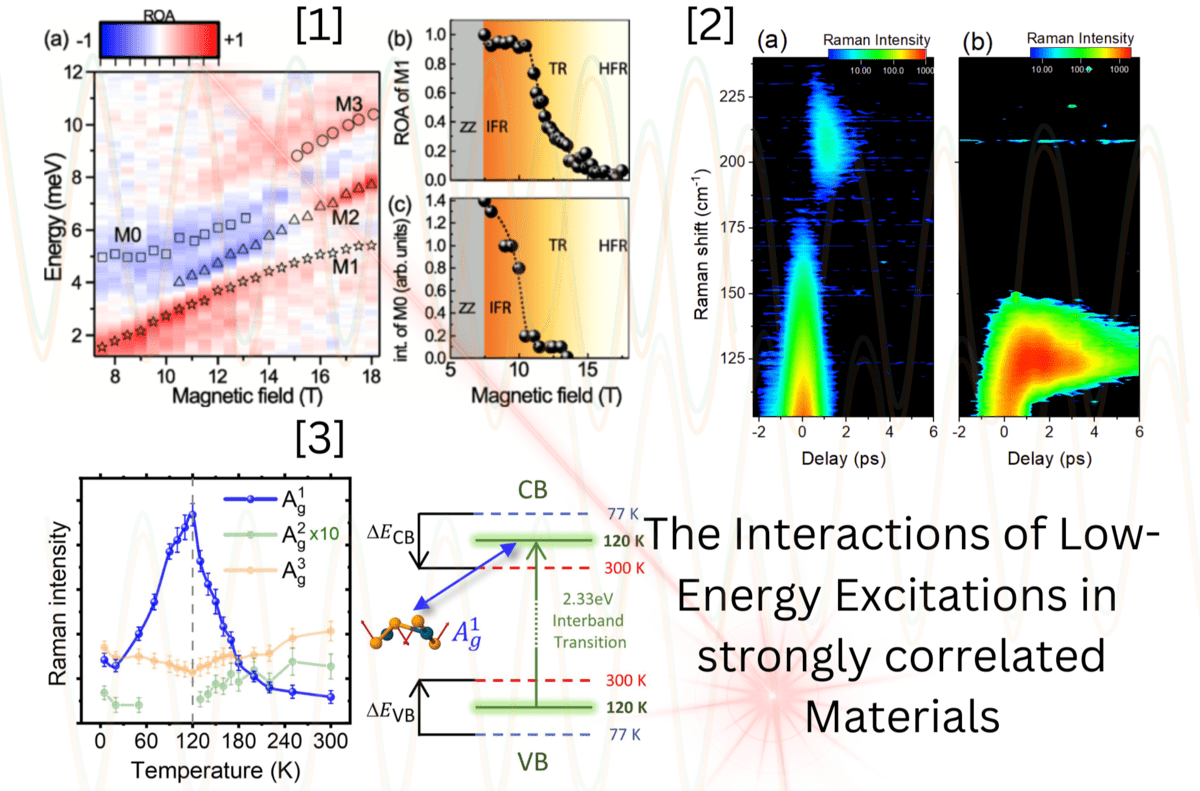
Phonons, magnons, quasiparticle dynamics and hybrid collective modes
We follow carriers, excitons, phonons, magnons and electronic order after
optical excitation. A central question is how these degrees of freedom
couple, form hybrid modes and reorganize or collapse far from equilibrium.
Quantum magnets and light-driven magnetic dynamics
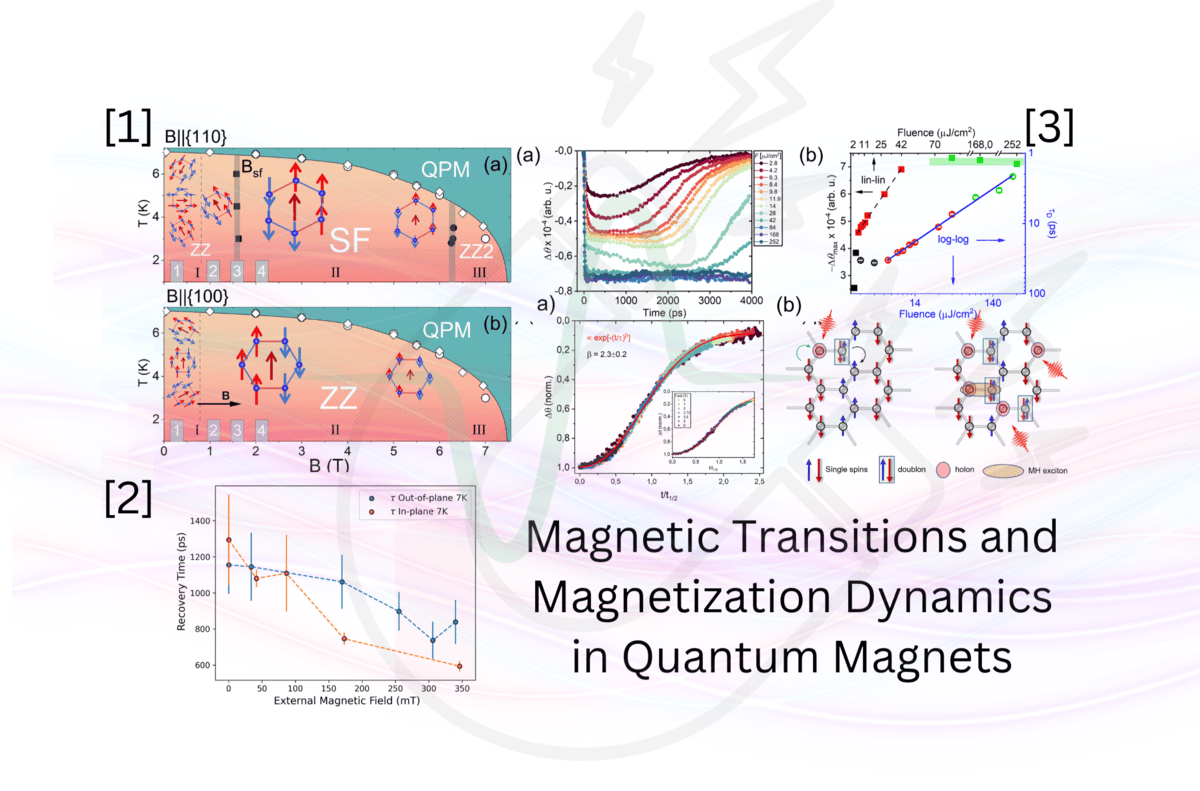
We study magnetic phase transitions, ultrafast demagnetization, spin
dynamics and optical control in layered antiferromagnets, Kitaev magnets,
altermagnets and other unconventional magnetic materials.
Hamoon Hedayat studies light-driven quantum matter, focusing on how
coupled charge, excitonic, lattice and spin degrees of freedom reorganize
far from equilibrium, form hybrid states and become optically
controllable.
Research and profile
He completed his doctorate at Politecnico di Milano. His early work in
Milan used ultrafast optical and photoemission spectroscopy to
investigate topological insulators, charge-density-wave systems and
layered semiconductors. After his doctorate, he was awarded the
Politecnico International Fellowship and later worked as a senior
researcher at the Italian National Research Council in Milan.
In 2021, he moved to the University of Cologne and established the
Hedayat Group. At Cologne, he developed the group's scientific
programme on nonequilibrium exciton, charge, lattice and spin dynamics
in low-dimensional quantum materials. He leads DFG-supported research
on ultrafast optical control of spins in antiferromagnet-TMDC
heterostructures and on quasiparticle dynamics and hybrid collective
modes in unconventional magnetic materials.
He completed his Habilitation in Physics at the University of Cologne.
Doctoral researchers
Omar Abdul-Aziz, M.Sc.
Doctoral researcher · since 2023
abdulazizph2.uni-koeln.de
Research and profile
Research project: Nonequilibrium quasiparticle dynamics and hybrid exciton-phonon order in layered quantum materials.
His work examines carrier relaxation, electronic-band dynamics, phonons and coupled collective excitations, including PdSe2 and 1T-TiSe2.
Omar studied general physics at the Lebanese University, graduating with
honours, and then took his Master's degree at the University of Bonn
through the Bonn-Cologne Graduate School. His Master's work in Cologne
was on charge-carrier dynamics in squaraine π-conjugated systems,
studied by ultrafast transient absorption spectroscopy. He held
scholarships from the Walid Joumblatt Foundation and the DAAD.
Research project: Ultrafast spin dynamics in quantum magnets and exciton transport, spin-valley dynamics and interlayer charge transfer in two-dimensional semiconductor heterostructures.
His project extends this direction toward coupled spin-phonon,
charge, exciton and spin dynamics at van der Waals antiferromagnets and interfaces.
Danilo took his Bachelor's and Master's degrees in physics at the
University of Trieste, graduating summa cum laude with a curriculum in
condensed matter. His Master's thesis used sum-frequency generation
spectroscopy under ultra-high vacuum to study bi-metallic porphyrin
monolayers, and gave him a background in surface science and UHV
instrumentation before he moved to ultrafast magneto-optics.
Research areas: quantum magnets · van der Waals magnets · criticalities · spin-valley dynamics
2D materials project:
Ultrafast optical control of spins in antiferromagnet-TMDC
heterostructures.
Anirudh completed his integrated BS-MS degree in Physics at the
Indian Institute of Science Education and Research Thiruvananthapuram,
India, in 2025. During his studies, he was a recipient of the INSPIRE
Scholarship awarded by the Department of Science and Technology,
Government of India. He developed an interest in two-dimensional
materials and van der Waals heterostructures during his Master's
thesis, which focused on excitonic phenomena in semiconductor
heterostructures investigated using photoluminescence spectroscopy.
In January 2026, he joined the Hedayat Group at the University of
Cologne as a doctoral researcher. His PhD research focuses on the optical and valley properties of
van der Waals heterostructures combining two-dimensional
semiconductors with magnetic materials. In particular, he
investigates how magnetic order influences excitons, valley
polarisation, charge-transfer processes, and nonequilibrium carrier
and phonon dynamics.
Dr. Julian Wagner: doctorate, University of Cologne Optical spectroscopy on spin-orbit coupled materials: dynamics of
the proximate Kitaev quantum spin liquid α-RuCl3 and exciton
dynamics in a MoSe2/WSe2 heterostructure
2024
Dr. Anuja Sahasrabudhe: doctorate, University of Cologne Raman scattering on the Kitaev magnet α-RuCl3 under high
magnetic field
2024
Sara Etman Zadeh, M.Sc.: Master's thesis; now a PhD
student at the University of Cologne Ultrafast Magnetization Dynamics in a
La0.7Sr0.3Mn1-xRuxO3
Multi-layer Thin-Film
Open positions and thesis projects
Funded PhD position · applications of interest open
Ultrafast quasiparticle dynamics and hybrid collective modes in
altermagnets
This DFG-funded project within Priority Programme SPP 2558 will investigate
the nonequilibrium response of spin-split
quasiparticles, electronic order and coupled collective modes in
altermagnetic and related unconventional magnetic materials.
Profile: Master's degree in physics, materials science or a
closely related subject; strong interest in condensed-matter physics,
ultrafast spectroscopy and quantitative data analysis. Experience with
lasers, optical spectroscopy, magnetism or numerical modelling is welcome.
Prospective applicants may send a short CV, transcript and a brief statement
of research interests.
hedayatph2.uni-koeln.de
Bachelor's and Master's theses
Thesis projects are available within the group's research lines. Each
project combines hands-on work at a femtosecond laser setup with data
analysis and modelling; the balance and depth are matched to the degree
level, the student's interests and the samples available.
Project descriptions
How fast does a 2D magnet lose its spin order?
CrSBr is a layered semiconductor that is also an antiferromagnet - two
properties that rarely coexist. When a femtosecond pulse excites it, the
magnetic order responds on timescales nobody can fully predict yet.
Project: use polarization-resolved pump-probe
spectroscopy to follow the spin response across the magnetic phase
transition and find out how magnetic order shapes the ultrafast
dynamics.
How far does an exciton travel before it decays?
In semiconductor heterostructures containing monolayer
MoSe2, the distance travelled by an exciton is governed by its
diffusion coefficient and lifetime. Heterodyne transient-grating
spectroscopy makes it possible to separate exciton transport from
population decay.
Project: investigate exciton transport in heterostructures
containing monolayer MoSe2 using heterodyne transient-grating
spectroscopy, determine how the diffusion coefficient depends on
temperature, and examine density-dependent recombination dynamics.
What makes an altermagnet different when you watch it in time?
Altermagnets are a newly recognized class of magnets with spin-split
bands but no net magnetization. Their ultrafast response is largely
unexplored territory - and one of the group's newest research
directions.
Project: measure and model the transient optical
response of an altermagnetic material and search for the signatures
that distinguish it from a conventional antiferromagnet.
To enquire about a thesis, please send your degree level, current transcript,
preferred project, expected starting date and a short CV to
hedayatph2.uni-koeln.de.
News
July 2026
Fantastic news: the DFG awarded our project “Ultrafast
Quasiparticle Dynamics and Hybrid Collective Modes in
Altermagnets” within SPP 2558!
July 2026
Our group-led study “Tracking the Catastrophic Collapse of Hybrid
Exciton-Phonon Order in a Quantum Material” was published in
Nature Communications 17, 7607 (2026).
Paper
January 2026
Anirudh Machanti joined the Hedayat Group as a doctoral researcher on
the DFG SPP 2244 project.
December 2025
Our paper on photoinduced electronic-band dynamics and
defect-mediated surface-potential evolution in PdSe2 was
published in npj 2D Materials and Applications.
Paper
October 2025
Congratulations to Julian on successfully defending his doctoral thesis!
July 2025
Our work travelled well this summer: talks at the SPICE Young
Research Leaders Group Workshop and UK Semiconductors 2025.
Earlier news
April 2025
Our DFG project “Ultrafast Optical Control of Spins in
Antiferromagnet-TMDC Heterostructures” started within Priority Programme
SPP 2244.
March 2025
Our paper on ultrafast spin-valley dynamics and phonon-mediated
charge transfer in MoSe2/WSe2
heterostructures was published in
Advanced Optical Materials.
Paper
August 2024
Greetings from Beijing: our research was presented at Peking
University and the German-China Workshop on Low-Dimensional
Materials.
July 2024
Our heterodyne transient-grating study of optically controlled exciton
diffusion in WSe2/graphene is out in Nano Letters!
April 2024
Our work on chiral excitations and the intermediate-field regime in
α-RuCl3 has appeared in Physical Review Research.
June 2024
Our temperature-dependent Raman study of PdSe2 has been published
in the Journal of Materials Chemistry C.
June 2024
Congratulations to Sara for brilliantly defending her master thesis titled
“Ultrafast Magnetization Dynamics in a
La0.7Sr0.3Mn1-xRuxO3
Multi-layer Thin-Film”!
May 2024
Exciting news! Our B05 project has been approved for the next round along
with all CRC 1238 projects!
January 2024
Anuja has successfully defended her PhD thesis “Chiral Excitations and
the Intermediate-Field Regime in the Kitaev Magnet α-RuCl3”
with outstanding results!
October 2023
A warm welcome to Danilo, who has joined our group as a doctoral researcher. We look
forward to great contributions from him!
2023
Our research was presented in invited talks at Forschungszentrum
Jülich, the CRC 1242 Colloquium and FISMAT.
December 2022
We extend a warm welcome to Sara as she embarks on her master thesis
journey!
November 2022
A big congratulations to Omar, who has joined us as a doctoral researcher for the
exciting new project “Ultrafast Spectroscopy of 2D Monolayers and
Heterostructures”!
September 2022
We have been awarded funding for the development of a state-of-the-art
microscope with transient absorption and broadband MOKE setup.
March 2022
Our new paper is out. If you are interested in nonequilibrium dynamics of
α-RuCl3, see
here!
January 2022
Our paper has been accepted for publication in npj Quantum Materials.
See here!
May 2021
The group has been awarded a CRC 1238 independence grant for 2021!
April 2021
Congratulations to Julian for publishing his master thesis in
2D Materials, see
here.
February 2021
The group was set up!
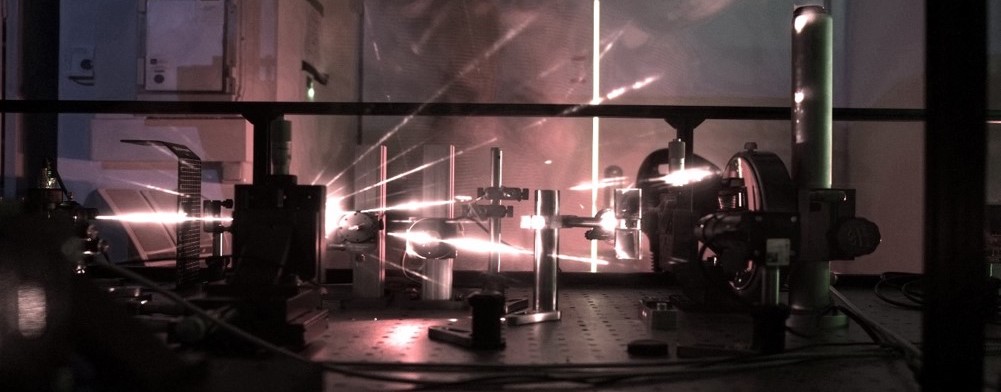
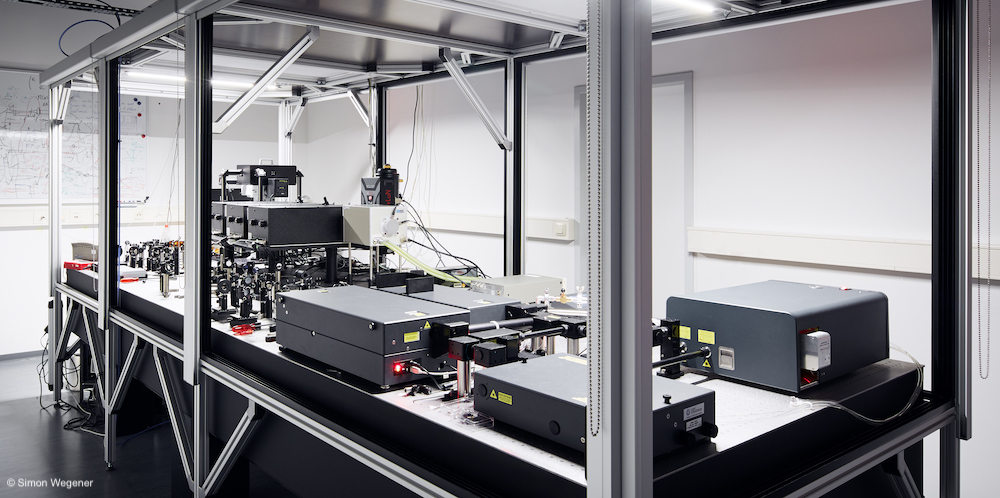
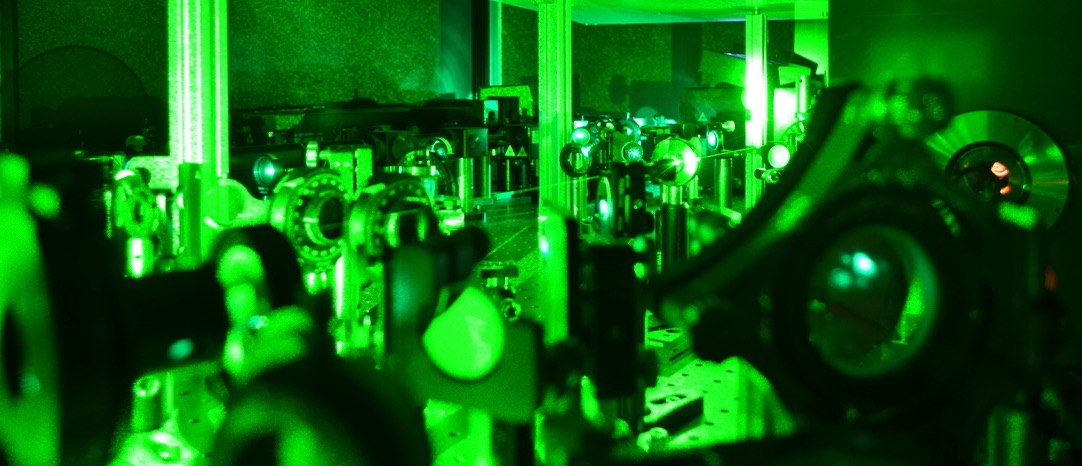
Laboratories
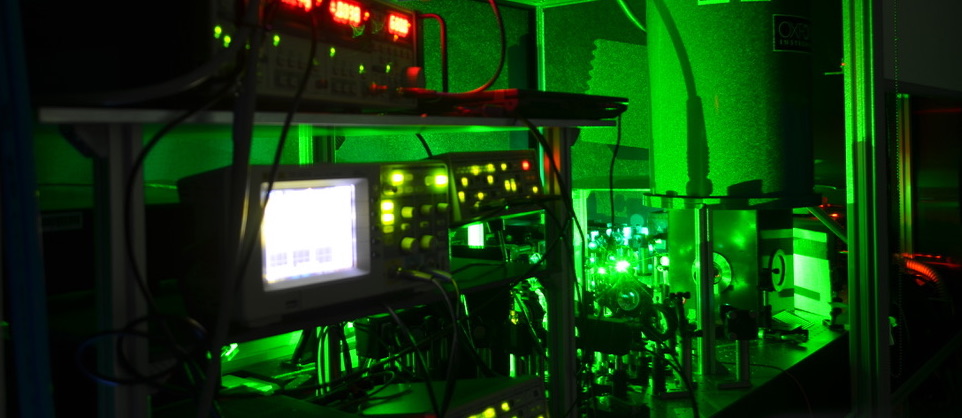
Our experiments use three complementary ultrafast-spectroscopy platforms,
as follows.
Time-resolved magneto-optics
Broadband, polarization-resolved measurements of spin, electronic and
symmetry dynamics under optical excitation.
50 fs · 2.5 K · magnetic fields up to 8 T
Heterodyne transient grating
Direct measurements of exciton, carrier, heat and spin transport in
monolayers and van der Waals heterostructures.
Heterodyne detection · 3-295 K
Time-resolved Raman
Dynamics of phonons, magnons and coupled collective modes after
photoexcitation.
Femtosecond and picosecond operation
Contact
PD Dr. Hamoon Hedayat
Institute of Physics II
University of Cologne
Zülpicher Str. 77
50937 Cologne
Germany
 Anirudh Machanti
 Danilo Comini